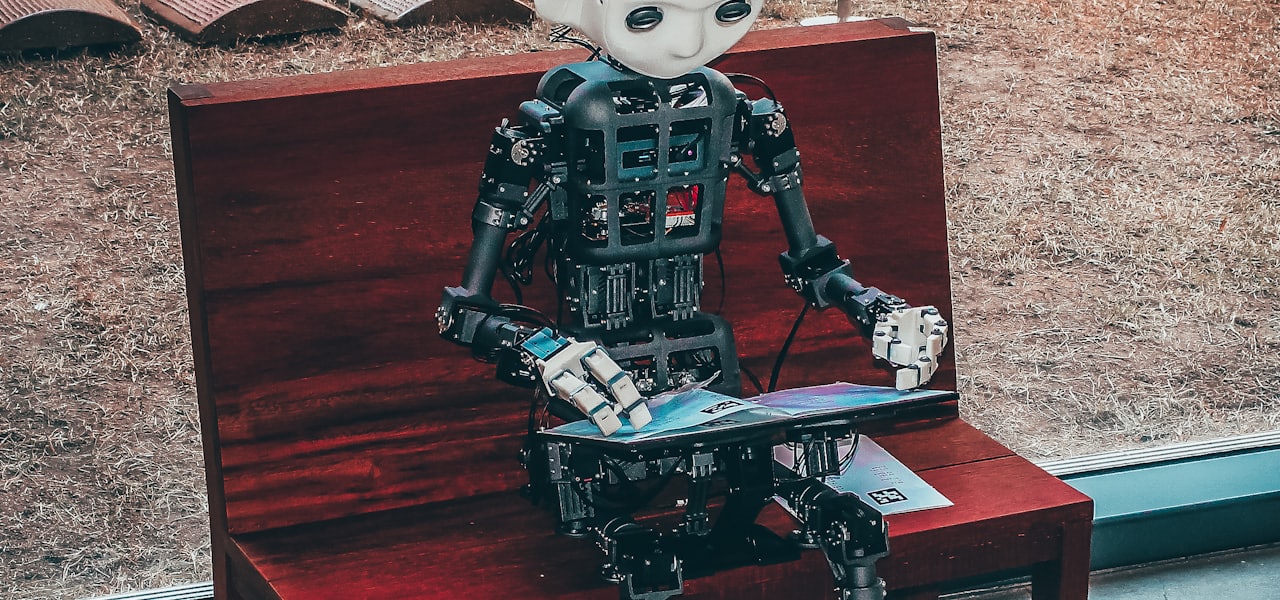
Universal psychometrics encompasses psychometrics instruments that could measure the psychological properties of any intelligent agent. Up until the early 21st century, psychometrics relied heavily on psychological tests that require the subject to cooperate and answer questions, the most famous example being an intelligence test. Such methods are only applicable to the measurement of human psychological properties. As a result, some researchers have proposed the idea of universal psychometrics - they suggest developing testing methods that allow for the measurement of non-human entities' psychological properties. For example, it has been suggested that the Turing test is a form of universal psychometrics. This test involves having testers (without any foreknowledge) attempt to distinguish a human from a machine by interacting with both (while not being to see either individuals). It is supposed that if the machine is equally intelligent to a human, the testers will not be able to distinguish between the two, i.e., their guesses will not be better than chance. Thus, Turing test could measure the intelligence (a psychological variable) of an AI. Other instruments proposed for universal psychometrics include reinforcement learning and measuring the ability to predict complexity.
Evaluation of binary classifiers
Evaluation of a binary classifier typically assigns a numerical value, or values, to a classifier that represent its accuracy. An example is error rate, which measures how frequently the classifier makes a mistake. There are many metrics that can be used; different fields have different preferences. For example, in medicine sensitivity and specificity are often used, while in computer science precision and recall are preferred. An important distinction is between metrics that are independent of the prevalence or skew (how often each class occurs in the population), and metrics that depend on the prevalence – both types are useful, but they have very different properties. Often, evaluation is used to compare two methods of classification, so that one can be adopted and the other discarded. Such comparisons are more directly achieved by a form of evaluation that results in a single unitary metric rather than a pair of metrics. == Contingency table == Given a data set, a classification (the output of a classifier on that set) gives two numbers: the number of positives and the number of negatives, which add up to the total size of the set. To evaluate a classifier, one compares its output to another reference classification – ideally a perfect classification, but in practice the output of another gold standard test – and cross tabulates the data into a 2×2 contingency table, comparing the two classifications. One then evaluates the classifier relative to the gold standard by computing summary statistics of these 4 numbers. Generally these statistics will be scale invariant (scaling all the numbers by the same factor does not change the output), to make them independent of population size, which is achieved by using ratios of homogeneous functions, most simply homogeneous linear or homogeneous quadratic functions. Say we test some people for the presence of a disease. Some of these people have the disease, and our test correctly says they are positive. They are called true positives (TP). Some have the disease, but the test incorrectly claims they don't. They are called false negatives (FN). Some don't have the disease, and the test says they don't – true negatives (TN). Finally, there might be healthy people who have a positive test result – false positives (FP). These can be arranged into a 2×2 contingency table (confusion matrix), conventionally with the test result on the vertical axis and the actual condition on the horizontal axis. These numbers can then be totaled, yielding both a grand total and marginal totals. Totaling the entire table, the number of true positives, false negatives, true negatives, and false positives add up to 100% of the set. Totaling the columns (adding vertically) the number of true positives and false positives add up to 100% of the test positives, and likewise for negatives. Totaling the rows (adding horizontally), the number of true positives and false negatives add up to 100% of the condition positives (conversely for negatives). The basic marginal ratio statistics are obtained by dividing the 2×2=4 values in the table by the marginal totals (either rows or columns), yielding 2 auxiliary 2×2 tables, for a total of 8 ratios. These ratios come in 4 complementary pairs, each pair summing to 1, and so each of these derived 2×2 tables can be summarized as a pair of 2 numbers, together with their complements. Further statistics can be obtained by taking ratios of these ratios, ratios of ratios, or more complicated functions. The contingency table and the most common derived ratios are summarized below; see sequel for details. Note that the rows correspond to the condition actually being positive or negative (or classified as such by the gold standard), as indicated by the color-coding, and the associated statistics are prevalence-independent, while the columns correspond to the test being positive or negative, and the associated statistics are prevalence-dependent. There are analogous likelihood ratios for prediction values, but these are less commonly used, and not depicted above. == Pairs of metrics == Often accuracy is evaluated with a pair of metrics composed in a standard pattern. === Sensitivity and specificity === The fundamental prevalence-independent statistics are sensitivity and specificity. Sensitivity or True Positive Rate (TPR), also known as recall, is the proportion of people that tested positive and are positive (True Positive, TP) of all the people that actually are positive (Condition Positive, CP = TP + FN). It can be seen as the probability that the test is positive given that the patient is sick. With higher sensitivity, fewer actual cases of disease go undetected (or, in the case of the factory quality control, fewer faulty products go to the market). Specificity (SPC) or True Negative Rate (TNR) is the proportion of people that tested negative and are negative (True Negative, TN) of all the people that actually are negative (Condition Negative, CN = TN + FP). As with sensitivity, it can be looked at as the probability that the test result is negative given that the patient is not sick. With higher specificity, fewer healthy people are labeled as sick (or, in the factory case, fewer good products are discarded). The relationship between sensitivity and specificity, as well as the performance of the classifier, can be visualized and studied using the Receiver Operating Characteristic (ROC) curve. In theory, sensitivity and specificity are independent in the sense that it is possible to achieve 100% in both (such as in the red/blue ball example given above). In more practical, less contrived instances, however, there is usually a trade-off, such that they are inversely proportional to one another to some extent. This is because we rarely measure the actual thing we would like to classify; rather, we generally measure an indicator of the thing we would like to classify, referred to as a surrogate marker. The reason why 100% is achievable in the ball example is because redness and blueness is determined by directly detecting redness and blueness. However, indicators are sometimes compromised, such as when non-indicators mimic indicators or when indicators are time-dependent, only becoming evident after a certain lag time. The following example of a pregnancy test will make use of such an indicator. Modern pregnancy tests do not use the pregnancy itself to determine pregnancy status; rather, human chorionic gonadotropin is used, or hCG, present in the urine of gravid females, as a surrogate marker to indicate that a woman is pregnant. Because hCG can also be produced by a tumor, the specificity of modern pregnancy tests cannot be 100% (because false positives are possible). Also, because hCG is present in the urine in such small concentrations after fertilization and early embryogenesis, the sensitivity of modern pregnancy tests cannot be 100% (because false negatives are possible). === Positive and negative predictive values === In addition to sensitivity and specificity, the performance of a binary classification test can be measured with positive predictive value (PPV), also known as precision, and negative predictive value (NPV). The positive prediction value answers the question "If the test result is positive, how well does that predict an actual presence of disease?". It is calculated as TP/(TP + FP); that is, it is the proportion of true positives out of all positive results. The negative prediction value is the same, but for negatives, naturally. ==== Impact of prevalence on predictive values ==== Prevalence has a significant impact on prediction values. As an example, suppose there is a test for a disease with 99% sensitivity and 99% specificity. If 2000 people are tested and the prevalence (in the sample) is 50%, 1000 of them are sick and 1000 of them are healthy. Thus about 990 true positives and 990 true negatives are likely, with 10 false positives and 10 false negatives. The positive and negative prediction values would be 99%, so there can be high confidence in the result. However, if the prevalence is only 5%, so of the 2000 people only 100 are really sick, then the prediction values change significantly. The likely result is 99 true positives, 1 false negative, 1881 true negatives and 19 false positives. Of the 19+99 people tested positive, only 99 really have the disease – that means, intuitively, that given that a patient's test result is positive, there is only 84% chance that they really have the disease. On the other hand, given that the patient's test result is negative, there is only 1 chance in 1882, or 0.05% probability, that the patient has the disease despite the test result. === Precision and recall === Precision and recall can be interpreted as (estimated) conditional probabilities: Precision is given by P ( C = P | C ^ = P ) {\displaystyle P(C=P|{\hat {C}}=P)} while recall is given by P ( C ^ = P | C = P ) {\displaystyle P({\hat {C}}=P|C=P)} , where C ^ {\
AI Avatar Generators: Free vs Paid (2026)
Comparing the best AI avatar generator? An AI avatar generator is software that uses machine learning to help you get more done — it lowers the barrier so anyone can produce professional output. Privacy matters too: check whether your data trains the model and whether a no-log or enterprise tier is available. Whether you are a beginner or a pro, the right AI avatar generator slots into your workflow and pays for itself fast. We tested the leading options and ranked them by quality, value, and ease of use.
FrameNet
FrameNet is a group of online lexical databases based upon the theory of meaning known as Frame semantics, developed by linguist Charles J. Fillmore. The project's fundamental notion is simple: most words' meanings may be best understood in terms of a semantic frame, which is a description of a certain kind of event, connection, or item and its actors. As an illustration, the act of cooking usually requires the following: a cook, the food being cooked, a container to hold the food while it is being cooked, and a heating instrument. Within FrameNet, this act is represented by a frame named Apply_heat, and its components (Cook, Food, Container, and Heating_instrument), are referred to as frame elements (FEs). The Apply_heat frame also lists a number of words that represent it, known as lexical units (LUs), like fry, bake, boil, and broil. Other frames are simpler. For example, Placing only has an agent or cause, a theme—something that is placed—and the location where it is placed. Some frames are more complex, like Revenge, which contains more FEs (offender, injury, injured party, avenger, and punishment). As in the examples of Apply_heat and Revenge below, FrameNet's role is to define the frames and annotate sentences to demonstrate how the FEs fit syntactically around the word that elicits the frame. == Concepts == === Frames === A frame is a schematic representation of a situation involving various participants, props, and other conceptual roles. Examples of frame names are Being_born and Locative_relation. A frame in FrameNet contains a textual description of what it represents (a frame definition), associated frame elements, lexical units, example sentences, and frame-to-frame relations. === Frame elements === Frame elements (FE) provide additional information to the semantic structure of a sentence. Each frame has a number of core and non-core FEs which can be thought of as semantic roles. Core FEs are essential to the meaning of the frame while non-core FEs are generally descriptive (such as time, place, manner, etc.) For example: The only core FE of the Being_born frame is called Child; non-core FEs Time, Place, Means, etc. Core FEs of the Commerce_goods-transfer frame include the Seller, Buyer, and Goods, while non-core FEs include a Place, Purpose, etc. FrameNet includes shallow data on syntactic roles that frame elements play in the example sentences. For example, for a sentence like "She was born about AD 460", FrameNet would mark She as a noun phrase referring to the Child frame element, and "about AD 460" as a noun phrase corresponding to the Time frame element. Details of how frame elements can be realized in a sentence are important because this reveals important information about the subcategorization frames as well as possible diathesis alternations (e.g. "John broke the window" vs. "The window broke") of a verb. === Lexical units === Lexical units (LUs) are lemmas, with their part of speech, that evoke a specific frame. In other words, when an LU is identified in a sentence, that specific LU can be associated with its specific frame(s). For each frame, there may be many LUs associated to that frame, and also there may be many frames that share a specific LU; this is typically the case with LUs that have multiple word senses. Alongside the frame, each lexical unit is associated with specific frame elements by means of the annotated example sentences. For example, lexical units that evoke the Complaining frame (or more specific perspectivized versions of it, to be precise), include the verbs complain, grouse, lament, and others. === Example sentences === Frames are associated with example sentences and frame elements are marked within the sentences. Thus, the sentence She was born about AD 460 is associated with the frame Being_born, while She is marked as the frame element Child and "about AD 460" is marked as Time. From the start, the FrameNet project has been committed to looking at evidence from actual language use as found in text collections like the British National Corpus. Based on such example sentences, automatic semantic role labeling tools are able to determine frames and mark frame elements in new sentences. === Valences === FrameNet also exposes statistics on the valence of each frame; that is, the number and position of the frame elements within example sentences. The sentence She was born about AD 460 falls in the valence pattern NP Ext, INI --, NP Dep which occurs twice in the FrameNet's annotation report for the born.v lexical unit, namely: She was born about AD 460, daughter and granddaughter of Roman and Byzantine emperors, whose family had been prominent in Roman politics for over 700 years. He was soon posted to north Africa, and never met their only child, a daughter born 8 June 1941. === Frame relations === FrameNet additionally captures relationships between different frames using relations. These include the following: Inheritance: When one frame is a more specific version of another, more abstract, parent frame. Anything that is true about the parent frame must also be true about the child frame, and a mapping is specified between the frame elements of the parent and the frame elements of the child. Perspectivization: A neutral frame is connected to a frame with a specific perspective of the same scenario. For example, Commerce_transfer-goods is considered from the perspective of the buyer in Commerce_buy and from that of the seller in Commerce_sell. Subframe: Some frames refer to complex scenarios that consist of several individual states or events that can be described by separate frames. For example, Criminal_process is composed of Arrest, Trial, and so on. Precedence: This relation captures the temporal order that holds between subframes of a complex frame. For example, within the Cycle_of_life_and_death frame, the subframe Death is preceded by the subframe Being_born. Causative and Inchoative: These two relations mark, for causative- and inchoative-aspect frames, the separate stative frame they refer to. For example, the stative Position_on_a_scale (e.g. "She had a high salary") is described by the causative Cause_change_of_scalar_position (e.g. "She raised his salary") and by the inchoative Change_position_on_a_scale frame (e.g. "Her salary increased"). Using: This relation marks a frame that in some way involves another frame. For example, Judgment_communication uses both Judgment and Statement, but does not inherit from either of them because there is no clear correspondence of frame elements. See also: Connects frames that bear some resemblance but need to be distinguished carefully. == Applications == FrameNet has proven to be useful in a number of computational applications, because computers need additional knowledge in order to recognize that "John sold a car to Mary" and "Mary bought a car from John" describe essentially the same situation, despite using two quite different verbs, different prepositions and a different word order. FrameNet has been used in applications like question answering, paraphrasing, recognizing textual entailment, and information extraction, either directly or by means of Semantic Role Labeling tools. The first automatic system for Semantic Role Labeling (SRL, sometimes also referred to as "shallow semantic parsing") was developed by Daniel Gildea and Daniel Jurafsky based on FrameNet in 2002. Semantic Role Labeling has since become one of the standard tasks in natural language processing, with the latest version (1.7) of FrameNet now fully supported in the Natural Language Toolkit. Since frames are essentially semantic descriptions, they are similar across languages, and several projects have arisen over the years that have relied on the original FrameNet as the basis for additional non-English FrameNets, for Spanish, Japanese, German, and Polish, among others.
AI Website Builders: Free vs Paid (2026)
Looking for the best AI website builder? An AI website builder is software that uses machine learning to help you get more done — it can save you hours every week by automating repetitive work. Most options offer a generous free tier, with paid plans unlocking higher limits, faster processing, and team features. Whether you are a beginner or a pro, the right AI website builder slots into your workflow and pays for itself fast. This guide breaks down the top picks, their pros and cons, and who each one is best for.
Biohybrid microswimmer
A biohybrid microswimmer also known as biohybrid nanorobot, can be defined as a microswimmer that consist of both biological and artificial constituents, for instance, one or several living microorganisms attached to one or various synthetic parts. In recent years nanoscopic and mesoscopic objects have been designed to collectively move through direct inspiration from nature or by harnessing its existing tools. Small mesoscopic to nanoscopic systems typically operate at low Reynolds numbers (Re ≪ 1), and understanding their motion becomes challenging. For locomotion to occur, the symmetry of the system must be broken. In addition, collective motion requires a coupling mechanism between the entities that make up the collective. To develop mesoscopic to nanoscopic entities capable of swarming behaviour, it has been hypothesised that the entities are characterised by broken symmetry with a well-defined morphology, and are powered with some material capable of harvesting energy. If the harvested energy results in a field surrounding the object, then this field can couple with the field of a neighbouring object and bring some coordination to the collective behaviour. Such robotic swarms have been categorised by an online expert panel as among the 10 great unresolved group challenges in the area of robotics. Although investigation of their underlying mechanism of action is still in its infancy, various systems have been developed that are capable of undergoing controlled and uncontrolled swarming motion by harvesting energy (e.g., light, thermal, etc.). Over the past decade, biohybrid microrobots, in which living mobile microorganisms are physically integrated with untethered artificial structures, have gained growing interest to enable the active locomotion and cargo delivery to a target destination. In addition to the motility, the intrinsic capabilities of sensing and eliciting an appropriate response to artificial and environmental changes make cell-based biohybrid microrobots appealing for transportation of cargo to the inaccessible cavities of the human body for local active delivery of diagnostic and therapeutic agents. == Background == Biohybrid microswimmers can be defined as microswimmers that consist of both biological and artificial constituents, for instance, one or several living microorganisms attached to one or various synthetic parts. The pioneers of this field, ahead of their time, were Montemagno and Bachand with a 1999 work regarding specific attachment strategies of biological molecules to nanofabricated substrates enabling the preparation of hybrid inorganic/organic nanoelectromechanical systems, so called NEMS. They described the production of large amounts of F1-ATPase from the thermophilic bacteria Bacillus PS3 for the preparation of F1-ATPase biomolecular motors immobilized on a nanoarray pattern of gold, copper or nickel produced by electron beam lithography. These proteins were attached to one micron microspheres tagged with a synthetic peptide. Consequently, they accomplished the preparation of a platform with chemically active sites and the development of biohybrid devices capable of converting energy of biomolecular motors into useful work. One of the most fundamental questions in science is what defines life. Collective motion is one of the hallmarks of life. This is commonly observed in nature at various dimensional levels as energized entities gather, in a concerted effort, into motile aggregated patterns. These motile aggregated events can be noticed, among many others, as dynamic swarms; e.g., unicellular organisms such as bacteria, locust swarms, or the flocking behaviour of birds. Ever since Newton established his equations of motion, the mystery of motion on the microscale has emerged frequently in scientific history, as famously demonstrated by a couple of articles that should be discussed briefly. First, an essential concept, popularized by Osborne Reynolds, is that the relative importance of inertia and viscosity for the motion of a fluid depends on certain details of the system under consideration. The Reynolds number Re, named in his honor, quantifies this comparison as a dimensionless ratio of characteristic inertial and viscous forces: R e = ρ u l μ {\displaystyle \mathrm {Re} ={\frac {\rho ul}{\mu }}} Here, ρ represents the density of the fluid; u is a characteristic velocity of the system (for instance, the velocity of a swimming particle); l is a characteristic length scale (e.g., the swimmer size); and μ is the viscosity of the fluid. Taking the suspending fluid to be water, and using experimentally observed values for u, one can determine that inertia is important for macroscopic swimmers like fish (Re = 100), while viscosity dominates the motion of microscale swimmers like bacteria (Re = 10−4). The overwhelming importance of viscosity for swimming at the micrometer scale has profound implications for swimming strategy. This has been discussed memorably by E. M. Purcell, who invited the reader into the world of microorganisms and theoretically studied the conditions of their motion. In the first place, propulsion strategies of large scale swimmers often involve imparting momentum to the surrounding fluid in periodic discrete events, such as vortex shedding, and coasting between these events through inertia. This cannot be effective for microscale swimmers like bacteria: due to the large viscous damping, the inertial coasting time of a micron-sized object is on the order of 1 μs. The coasting distance of a microorganism moving at a typical speed is about 0.1 angstroms (Å). Purcell concluded that only forces that are exerted in the present moment on a microscale body contribute to its propulsion, so a constant energy conversion method is essential. Microorganisms have optimized their metabolism for continuous energy production, while purely artificial microswimmers (microrobots) must obtain energy from the environment, since their on-board-storage-capacity is very limited. As a further consequence of the continuous dissipation of energy, biological and artificial microswimmers do not obey the laws of equilibrium statistical physics, and need to be described by non-equilibrium dynamics. Mathematically, Purcell explored the implications of low Reynolds number by taking the Navier-Stokes equation and eliminating the inertial terms: μ ∇ 2 u − ∇ p = 0 {\displaystyle {\begin{aligned}\mu \nabla ^{2}\mathbf {u} -{\boldsymbol {\nabla }}p&={\boldsymbol {0}}\\\end{aligned}}} where u {\displaystyle \mathbf {u} } is the velocity of the fluid and ∇ p {\displaystyle {\boldsymbol {\nabla }}p} is the gradient of the pressure. As Purcell noted, the resulting equation — the Stokes equation — contains no explicit time dependence. This has some important consequences for how a suspended body (e.g., a bacterium) can swim through periodic mechanical motions or deformations (e.g., of a flagellum). First, the rate of motion is practically irrelevant for the motion of the microswimmer and of the surrounding fluid: changing the rate of motion will change the scale of the velocities of the fluid and of the microswimmer, but it will not change the pattern of fluid flow. Secondly, reversing the direction of mechanical motion will simply reverse all velocities in the system. These properties of the Stokes equation severely restrict the range of feasible swimming strategies. Recent publications of biohybrid microswimmers include the use of sperm cells, contractive muscle cells, and bacteria as biological components, as they can efficiently convert chemical energy into movement, and additionally are capable of performing complicated motion depending on environmental conditions. In this sense, biohybrid microswimmer systems can be described as the combination of different functional components: cargo and carrier. The cargo is an element of interest to be moved (and possibly released) in a customized way. The carrier is the component responsible for the movement of the biohybrid, transporting the desired cargo, which is linked to its surface. The great majority of these systems rely on biological motile propulsion for the transportation of synthetic cargo for targeted drug delivery/ There are also examples of the opposite case: artificial microswimmers with biological cargo systems. Over the past decade, biohybrid microrobots, in which living mobile microorganisms are physically integrated with untethered artificial structures, have gained growing interest to enable the active locomotion and cargo delivery to a target destination. In addition to the motility, the intrinsic capabilities of sensing and eliciting an appropriate response to artificial and environmental changes make cell-based biohybrid microrobots appealing for transportation of cargo to the inaccessible cavities of the human body for local active delivery of diagnostic and therapeutic agents. Active locomotion, targeting and steering of concentrated therape
Is an AI Background Remover Worth It in 2026?
Comparing the best AI background remover? An AI background remover is software that uses machine learning to help you get more done — it lowers the barrier so anyone can produce professional output. Privacy matters too: check whether your data trains the model and whether a no-log or enterprise tier is available. Whether you are a beginner or a pro, the right AI background remover slots into your workflow and pays for itself fast. Below we compare features, pricing, and real output so you can choose with confidence.